
1. Introduction
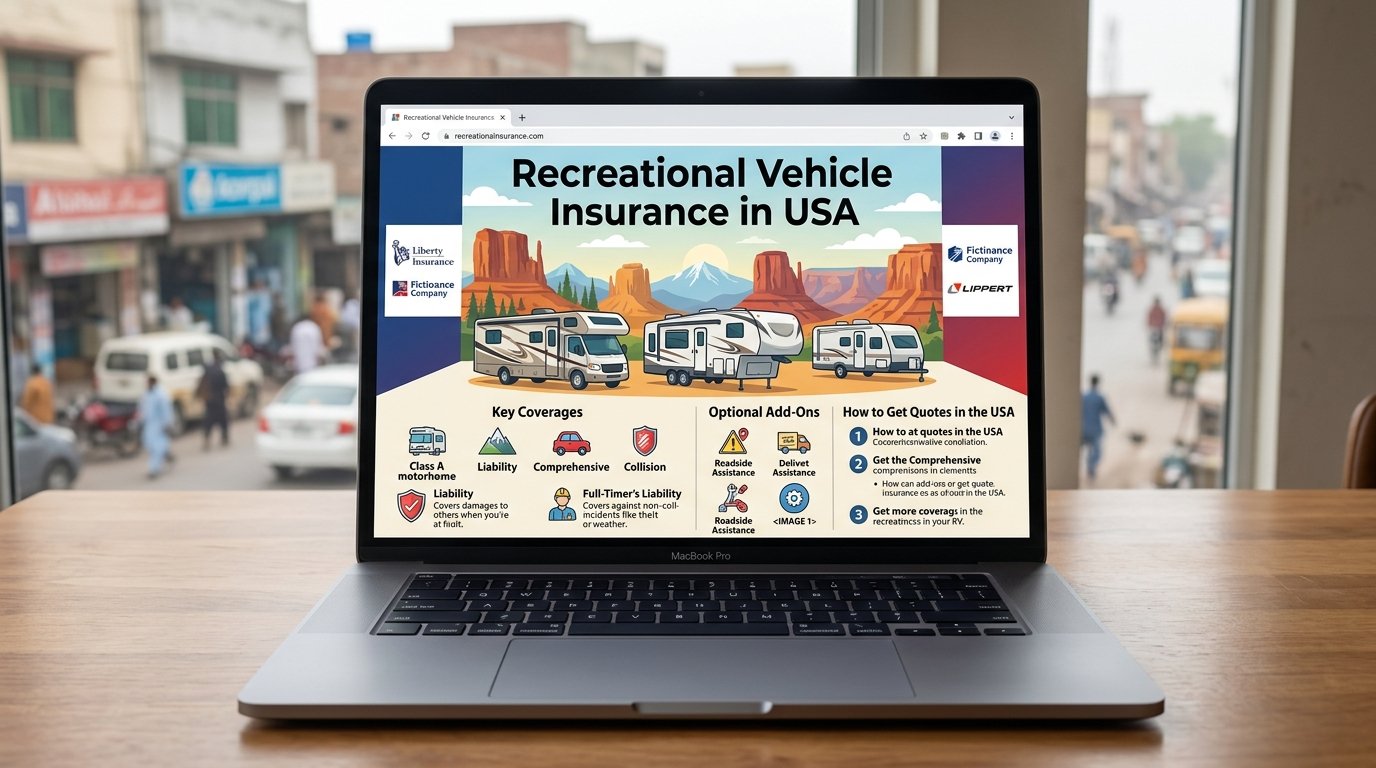
Recreational vehicle insurance can protect motorhomes, travel trailers, fifth wheels, camper vans, pop-up campers, and other RVs against qualifying accidents, theft, weather damage, liability claims, and other covered losses.
Because RVs can function as both vehicles and living spaces, their insurance needs can be different from ordinary automobile coverage. The right policy depends on whether the RV is driven or towed, how often it is used, where it is stored, its value, and whether it is used as a full-time residence.
The cheapest quote isn’t always the best choice. A policy with a slightly higher premium may provide better personal-property protection, roadside assistance, total-loss provisions, or liability limits.
This guide explains 12 smart ways to compare RV insurance quotes and find better coverage at a competitive price.
2. What Is Recreational Vehicle Insurance?
Recreational vehicle insurance is specialized insurance designed for vehicles used primarily for recreation, travel, camping, or temporary living.
Common Types of RVs
RV insurance can apply to:
- Class A motorhomes
- Class B camper vans
- Class C motorhomes
- Travel trailers
- Fifth wheels
- Pop-up campers
- Truck campers
- Toy haulers
Motorhomes are generally driven, while travel trailers and fifth wheels are normally towed. That distinction can affect the insurance policy and coverage required.
RV Insurance Companies to Compare
| Company | RV Coverage | Published Pricing / Savings | Official Website |
|---|---|---|---|
| Progressive | Motorhomes, travel trailers, fifth wheels and campers | Qualifying motorhome liability-only policies start at $125/year; multiple discounts | Progressive RV Insurance |
| National General | Motorhomes, travel trailers and RVs | Up to 53% storage savings and up to 20% multi-vehicle savings for qualifying customers | National General RV Insurance |
| Foremost | Motorhomes, fifth wheels, travel trailers and campers | Multiple RV discounts and full-timer options | Foremost RV Insurance |
| American Family | RVs, motorhomes and trailers | Bundling and other potential discounts | American Family RV Insurance |
These companies are included for comparison purposes, not endorsements. Rates, discounts, coverage, eligibility, and availability vary by state and customer.
Progressive currently advertises qualifying motorhome liability-only coverage starting at $125 per year and reports 2024 national average premiums of $594 for travel trailers and $1,052 for motorhomes on its book of business. (progressive.com)
National General currently advertises up to 53% savings through its storage option and up to 20% multi-vehicle savings for qualifying customers. (nationalgeneral.com)
3. Key Features
Liability Coverage
Liability coverage may help with qualifying injuries or property damage for which you are legally responsible.
Comprehensive Coverage
Comprehensive coverage can protect against certain non-collision losses such as theft, fire, vandalism, weather damage, and animal strikes, subject to policy terms.
Collision Coverage
Collision coverage can help pay for qualifying physical damage caused by a collision or rollover.
Personal Property Coverage
RV policies may provide coverage for qualifying belongings kept inside the vehicle.
National General currently advertises personal-property coverage beginning with a $3,000 limit, with additional coverage available for qualifying customers. (nationalgeneral.com)
Roadside Assistance
Depending on the insurer, roadside coverage may include towing, tire assistance, fuel delivery, jump-starts, and lockout services.
Full-Time RV Coverage
If an RV is used as your primary residence, you may need additional protection beyond standard recreational-use coverage.
Foremost offers full-timer coverage for qualifying RV owners, while Progressive also explains that full-time users may require additional coverage. (foremost.com)
4. Benefits
Protects a Significant Investment
A motorhome or high-value trailer can represent a substantial financial investment. Appropriate insurance can reduce the financial impact of covered losses.
Specialized Protection
Dedicated RV insurance can address risks and equipment that a standard automobile policy may not fully address.
Potential Discounts
Depending on the insurer, savings may be available for:
- Multi-policy coverage
- Multiple vehicles
- Claim-free history
- Safe driving
- Pay-in-full
- Original ownership
- Safety equipment
- Continuous insurance
- Homeownership
Progressive currently lists multiple RV discount opportunities, including multi-policy, original-owner, responsible-driver, pay-in-full, continuous-insurance, claim-free, homeowner, and paperless discounts. (progressive.com)
Storage Savings
Some insurers provide ways to reduce premiums when an RV spends significant periods stored and unused.
National General currently advertises storage savings of up to 53% for qualifying RV policies. (nationalgeneral.com)
5. Pricing
There is no universal recreational vehicle insurance price.
Factors That Affect Your Quote
Insurers may consider:
- RV type
- Year
- Make and model
- Current value
- Location
- Annual mileage
- Usage
- Driving record
- Claims history
- Coverage limits
- Deductibles
- Storage location
- Personal belongings
- Full-time use
Progressive explains that RV type, location, use, driving history, claims history, and selected coverages can affect insurance costs. (progressive.com)
Published Pricing Examples
| Provider | Published Figure |
|---|---|
| Progressive motorhome liability-only starting price | $125/year |
| Progressive 2024 travel-trailer average | $594/year |
| Progressive 2024 motorhome average | $1,052/year |
| National General storage savings | Up to 53% |
| National General multi-vehicle savings | Up to 20% |
These figures are not guaranteed quotes. Actual premiums depend on your vehicle, location, policy, driving history, claims history, and other factors. (progressive.com; nationalgeneral.com)
6. Pros & Cons
Pros
| Advantages |
|---|
| Specialized RV protection |
| Liability coverage |
| Collision and comprehensive options |
| Personal-property protection may be available |
| Storage discounts may be available |
| Multiple insurer options |
| Roadside assistance may be included or added |
Cons
| Potential Drawbacks |
|---|
| Premiums can vary substantially |
| Optional coverage adds cost |
| Higher deductibles increase out-of-pocket expenses |
| Full-time RV use can require additional protection |
| Policy exclusions differ by insurer |
| Cheapest quote may offer less coverage |
7. Comparison With Alternatives
Dedicated RV Insurance
Best for: RV owners who want specialized coverage.
It can provide protection specifically designed around RV use, equipment, and personal belongings.
Standard Auto Insurance
Best for: Limited protection associated with the tow vehicle.
Don’t assume an ordinary auto policy fully protects the trailer or its contents.
Homeowners Insurance
Homeowners insurance may offer limited coverage in certain situations, but it generally isn’t a substitute for a dedicated RV policy.
Storage Options
Best for: Owners who do not use their RV throughout the year.
Some insurers may reduce certain costs while an RV is stored, subject to policy conditions.
Full-Time RV Insurance
Best for: People using an RV as their primary residence.
Full-time coverage can address risks that a recreational policy may not adequately cover.
8. Real User Reviews
What to Look For
When reviewing customer feedback, focus on:
- Claims handling
- Agent communication
- Billing
- Roadside assistance
- Total-loss claims
- Personal-property claims
- Policy changes
- Customer service
Compare Reviews With Policy Terms
Reviews can identify patterns, but they don’t guarantee future performance.
A company may receive excellent overall reviews while offering less favorable terms for your particular RV.
Look specifically for reviews about RV claims, not just ordinary automobile insurance.
9. Who Should Compare RV Insurance Quotes?
Motorhome Owners
Motorhome owners need coverage designed for a vehicle that is driven.
Travel-Trailer Owners
Travel trailers have different insurance considerations because they are towed.
Fifth-Wheel Owners
Fifth wheels can contain substantial living space, equipment, and personal belongings.
Seasonal RV Users
If your RV is stored for much of the year, compare storage-related savings.
Full-Time RVers
People living in an RV should specifically ask about full-time coverage.
RV Owners With Expensive Equipment
If you carry electronics, bicycles, cameras, generators, solar equipment, or other valuable items, review personal-property and special-equipment limits.
10. 12 Smart Ways to Compare Quotes and Find Better Coverage
1. Identify Your Exact RV Type
Tell each insurer whether you’re insuring a motorhome, travel trailer, fifth wheel, pop-up camper, truck camper, or another type.
Accurate vehicle classification helps ensure that you’re comparing appropriate policies.
2. Compare Identical Coverage
Use matching:
- Liability limits
- Collision coverage
- Comprehensive coverage
- Personal-property limits
- Deductibles
- Optional coverage
Progressive recommends comparing quotes based on the actual coverage you need rather than relying solely on price. (progressive.com)
3. Compare Deductibles
A higher deductible can reduce premiums, but it also means paying more out of pocket after a covered loss.
4. Review Personal-Property Limits
Check whether your belongings inside the RV are covered and whether the limit is sufficient.
National General currently advertises an initial $3,000 personal-property limit with additional protection available. (nationalgeneral.com)
5. Compare Total-Loss Protection
Ask how the insurer determines the value of your RV after a total loss.
Some policies may offer replacement-cost or specialized total-loss settlement options.
Foremost currently offers a Total Loss Settlement option for qualifying customers. (foremost.com)
6. Investigate Storage Savings
If your RV is unused for several months, ask about storage programs.
National General currently advertises savings of up to 53% for qualifying storage policies. (nationalgeneral.com)
7. Ask About Bundling
Combining RV insurance with eligible auto, home, renters, boat, or motorcycle coverage may qualify for discounts.
Progressive currently lists multi-policy savings among its RV discounts. (progressive.com)
8. Check Roadside Assistance
Compare:
- Towing limits
- Tire service
- Fuel delivery
- Locksmith services
- Emergency assistance
Roadside coverage can become particularly valuable when traveling far from home.
9. Review Special Equipment
Make sure the policy appropriately addresses:
- Awnings
- Generators
- Solar systems
- Satellite equipment
- Custom electronics
- Appliances
- Custom interiors
Ask whether these items are automatically covered or require additional protection.
10. Tell the Insurer About Your Usage
Explain whether you use the RV:
- Occasionally
- Seasonally
- Frequently
- As a full-time residence
- For business purposes
Do not provide inaccurate information simply to obtain a lower quote.
11. Ask About Every Discount
Compare savings for:
- Safe driving
- Multiple policies
- Multiple vehicles
- Claim-free history
- Pay-in-full
- Original ownership
- Safety equipment
- Continuous insurance
Eligibility varies by insurer and state.
12. Re-Shop at Renewal
Don’t assume your current insurer will remain the cheapest.
Compare quotes when:
- You move
- Your RV gets older
- Your usage changes
- Your driving history improves
- You purchase another policy
- Your premium increases
11. FAQs
How much does recreational vehicle insurance cost?
The price varies significantly by RV type, value, location, usage, driving record, claims history, coverage, and deductible.
Progressive reports 2024 national averages of $594 for travel trailers and $1,052 for motorhomes on its book of business, while qualifying motorhome liability-only coverage starts at $125 annually. (progressive.com)
Is RV insurance required?
Requirements depend on the RV type and state. Motorhomes generally have automobile insurance requirements because they are motor vehicles, while towed trailers may have different rules.
A lender or leasing company may also require physical-damage coverage.
Does my auto insurance cover my travel trailer?
Your auto policy may provide certain liability coverage while towing, depending on the policy and circumstances. It should not be assumed to provide complete physical-damage coverage for the trailer.
Does homeowners insurance cover my RV?
Homeowners coverage may provide limited protection in certain situations, but it isn’t generally a substitute for dedicated RV insurance.
Can I save money when my RV is stored?
Potentially. National General currently advertises storage savings of up to 53% for qualifying customers. (nationalgeneral.com)
Can I insure an RV used as a permanent residence?
Potentially. Ask for full-time RV coverage if you live in the RV as your primary residence. (foremost.com)
Does RV insurance cover personal belongings?
Some policies provide personal-property coverage. Limits and covered items vary significantly between policies.
Can I get roadside assistance with RV insurance?
Many insurers offer roadside assistance as an included or optional coverage. Compare service limits and eligible expenses.
Is the cheapest RV policy the best?
Not necessarily. Compare the premium with coverage limits, deductibles, total-loss provisions, personal-property protection, roadside assistance, and exclusions.
12. Final Verdict
Recreational vehicle insurance should be compared based on both cost and protection.
The smartest approach is to obtain several quotes using the same vehicle information and equivalent coverage. Then compare liability limits, deductibles, personal-property coverage, total-loss protection, roadside assistance, storage options, discounts, and exclusions.
Companies such as Progressive, National General, Foremost, and American Family provide different RV insurance options worth researching.
A very low premium can be attractive, but it isn’t necessarily a good deal if the policy leaves you exposed to significant losses.
The right insurance should match your RV’s value, your travel habits, storage arrangements, and how you use the vehicle.
13. Call to Action
Before purchasing recreational vehicle insurance, request several quotes and compare:
- Annual premium
- Liability limits
- Collision coverage
- Comprehensive coverage
- Personal-property limits
- Deductibles
- Total-loss settlement
- Roadside assistance
- Storage options
- Bundling discounts
- Special-equipment coverage
- Full-time-use protection